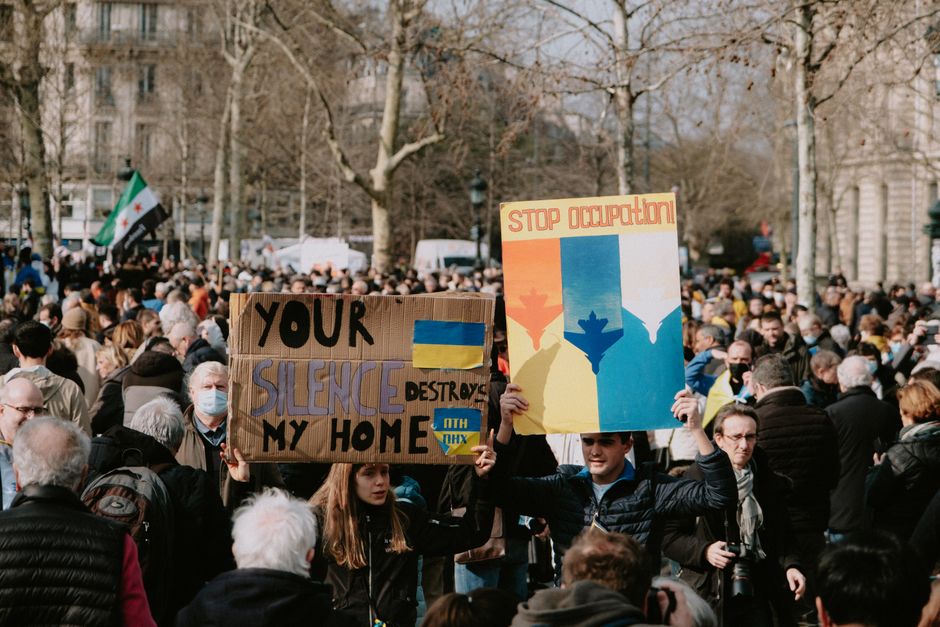
The most recent French arrest figure in the supplied reporting is 1,435, which SANA, a state-run Syrian news agency, reported on 26 October as the number cited by Interior Minister Laurent Nuñez. It updates an official count of 1,314 for protests held on Saturday 24 October and announced on 25 October. The "at least 1,800" figure that still circulates is an AP count for the weekend of 17-18 October. It was a minimum then and it is not a running total now.
Every French official figure in the sources reached us second-hand. No primary Interior Ministry statement was retrieved, and no consolidated national total appears in the reporting reviewed. The figures below are snapshots from different dates, and the sources do not say how each was counted.
Arrest figures, by date
The counts run in three phases. The first is the AP tally for 17-18 October, carried by CBS News, NPR and TPR. AP described "at least 1,800" as a minimum after violent groups clashed with officers and looted shops. The same CBS/AP reporting gives authorities' estimate of nationwide participation at about 550,000 and organisers' at about 800,000, says more than 500 police officers, gendarmes and firefighters were injured according to Nuñez, and reports that Paris police counted 855 arrests in the capital region. The Paris prosecutor's office, not police, is the source for the 557 people held in custody, according to the same reporting.
The second phase is the Interior Ministry's count of 1,314 arrests and 53 injured officers for Saturday 24 October, reported by CBS News. The third is the 1,435 figure SANA attributes to Nuñez on 26 October. That is an update to the same day's count, not a separate day. SANA also reported that about 100 of those arrested were carrying items that could be used as weapons, and that curfews remained in force in more than ten areas. Only SANA reported the 1,435 figure in the sources found.
Wikipedia's timeline gives a much larger cumulative number: about 2,700 arrests as of 22 October, with more than 1,000 court appearances and 217 jailings, attributed to Justice Minister Gérald Darmanin. Dynamite News gives 232 for the jailings, so the second figure is itself disputed. No primary or wire source for the Darmanin statement was located. Wikipedia also lists 1,949 arrests on 1 October and 1,793 people in custody from Monday 28 September to 2 October. Those belong to an earlier phase of the protests and should not be merged with the mid-October figures.
What is driving the protests
Wikipedia's timeline says the protests began in September with high school students criticising school conditions and later widened to living standards and public services. CNBC's coverage places living costs and housing at the centre of the grievances across several European countries, and says fuel and energy costs were part of the backdrop in several of them. The two sources describe the same arc from different angles, and neither offers survey or demographic data on who is taking part.
Some outlets describe the movement as a "Gen Z" protest. That is a label applied by coverage, not a measured feature of participants, and no source in the research establishes how many participants are young people. NPR reported that Macron voiced the public's "anger" and "shame" and vowed to hold accountable those who sought to bring down the Republic. That is the government's response to the violence. It says little about what caused the protests.
Were the protests mostly violent or peaceful?
Both, on different days and in different places, and the sources do not allow a single ratio. According to CBS, Nuñez said Saturday's marches "passed off well", and that police later faced an "extremely elevated level of violence" from ultra-left groups. Those are official characterisations. The independent reporting reviewed did not confirm which groups were responsible for which clashes.
Clashes were not confined to Paris. CBS reported tear gas in Clermont-Ferrand, Bordeaux and Strasbourg. In Nice, the interior minister's account, as relayed by reporting, describes far-right groups confronting far-left activists. The Nice counts also differ in date and source. CBS reported 11 arrests there, with no date given in the research. A CNN live report cites the Nice prefect with 63 arrests and five injured, without a date for that count either. The two numbers should not be compared.
Italy, Spain and Portugal
Protests were reported in all three countries, but the evidence is uneven. The Spanish and Portuguese reports include no dated arrest or participant counts.
For Italy, a Tribune India report, carrying ANI material, cites Italian police as saying nine people were arrested and 371 briefly detained across eight cities on Saturday. That is a single wire-style source. A Wikipedia entry on European unrest places Italian student protests from 16 October, but the research holds no second source for the start date or the "No Meloni Day" banner, so those details are left out here.
For Spain, CNBC reports that housing protests began in September after an 87-year-old woman was evicted, and cites a reported 230% rent increase by an investment fund. CNN reported that the protests preceded a snap election, which it described as an apparent effort to seize the initiative after the protests and a failed housing vote. No Spanish government source confirming the link was located, and the 230% figure is not corroborated elsewhere in the research.
For Portugal, CNBC reports thousands protesting on a Saturday against housing and living costs. Finance Minister Miranda Sarmento is quoted as saying the situation across Europe varies and that Portugal has a stronger fiscal position and much less debt than France. That is a comparison of public finances, not evidence about the protests' causes. No protest size beyond "thousands" was reported.
Is it still escalating?
The reporting shows protests continuing into late October, without a clear peak. SANA reported that further protests were scheduled for the following Saturday, which falls on Halloween, and that enhanced security was being prepared. That is one state-run source. The arrest counts do not follow a steady trend, so the reporting gives no basis for forecasting the size of the next round.
The 2018 and 2023 comparisons
The "nearly 1,800" figure is sometimes confused with the 2018 yellow vest protests. A VOA report carried by GlobalSecurity gives nearly 1,800 arrests on 8 December 2018. That was a different event with a different cause, and the 2026 round should not be read as a continuation of it. The research includes no verified source for a comparable July 2023 total, so this article makes no 2023 comparison.
Evidence assessment
Strongly supported: the AP characterisation of the 17-18 October count as a minimum of at least 1,800 arrests, and the 1,800 figure's status as a weekend count rather than a current total. The broad sequence of protests, from student grievances to wider cost-of-living and public-service complaints, is also consistent across the sources reviewed, though the sources are secondary.
Moderately supported: the 1,314 arrests and 53 injured officers for 24 October, reported by CBS News and by SANA, both resting on Interior Ministry claims. The 1,435 figure for 26 October, attributed to Nuñez by SANA alone. The 550,000 and 800,000 participant estimates, and the Paris figures, reported by CBS and AP. The official characterisation that Saturday's marches passed off well and later violence came from ultra-left groups, which is an attributed claim rather than a verified finding. The Nice counts, which are dated in neither source.
Weak or preliminary: the 2,700 cumulative arrests and 217 jailings attributed to Darmanin, which rest on Wikipedia and conflict with a different jailing figure elsewhere. The Spanish snap-election link, from CNN alone. The 230% rent increase, from CNBC alone. The Italian arrest and detention counts, from one wire-style report. The Halloween scheduling and enhanced security, from one state-run source. The Portuguese protest description.
Unknown: whether the French figures are cumulative or per-day, and how each was counted. The cause of the death reported by Paris police, which the sources do not link to the protests. Participant or arrest counts for Spain and Portugal. Whether the ultra-left and far-right attributions are supported by evidence. Whether the Italian, Spanish and Portuguese protests are linked to the French movement.
Practical implications
If you need a French arrest number for publication or a briefing, give the date of the count and the source with it, for example "1,314 arrests for protests on 24 October, per the Interior Ministry as reported by CBS News". Do not add the daily figures together, and do not carry the 1,800 figure forward as current. Treat the 2,700 cumulative figure as unconfirmed until a primary French source or a major wire service reports it.
For anyone assessing risk to travel, events or operations in France, the operational signals in the reporting are the curfews in more than ten areas and the scheduled Halloween protests, not the arrest totals. Check prefecture and government notices directly. The Italian, Spanish and Portuguese reports are leads, and each needs its own primary sources before it is compared with France.
Limitations and open questions
The main gap is the absence of a primary French source. The Interior Ministry's own statements were not retrieved, so every official French figure reaches this article second-hand. The counting method is also unstated. It is not clear whether each figure is cumulative from a start date, per day, or per protest weekend, and that determines whether the numbers can be compared at all.
Causation is contested. Official voices emphasise violent groups, and the movement's grievances centre on living costs and public services. The sources reviewed do not test either framing against survey or demographic data. A breakdown of arrests by age, affiliation and location, published by French authorities or an independent monitor, would address much of this. For the neighbouring countries, the open question is whether the protests share a common cause or are linked organisationally. Dated, sourced counts from national authorities would be needed to answer that.
Editor's take
The 1,800 figure should come out of current coverage. It is an accurate AP count for a single weekend, but it is now the least current number in circulation, and it still appears in reporting that presents it as the total. The most recent French figure that has been widely reported is the 1,314 count for 24 October, although it still rests on official claims. The 1,435 figure is the latest in the research but comes from one state-run source.
The 2,700 cumulative figure, the Spanish election link and the Italian counts each rest on a single source or an aggregator. They can be reported, but only with that attribution attached. Presenting them without it would imply a level of confirmation the research does not support.
The French protests are large and still active, and the reasons behind them remain contested. A primary French ministry release or a consolidated wire count would settle the national figure.