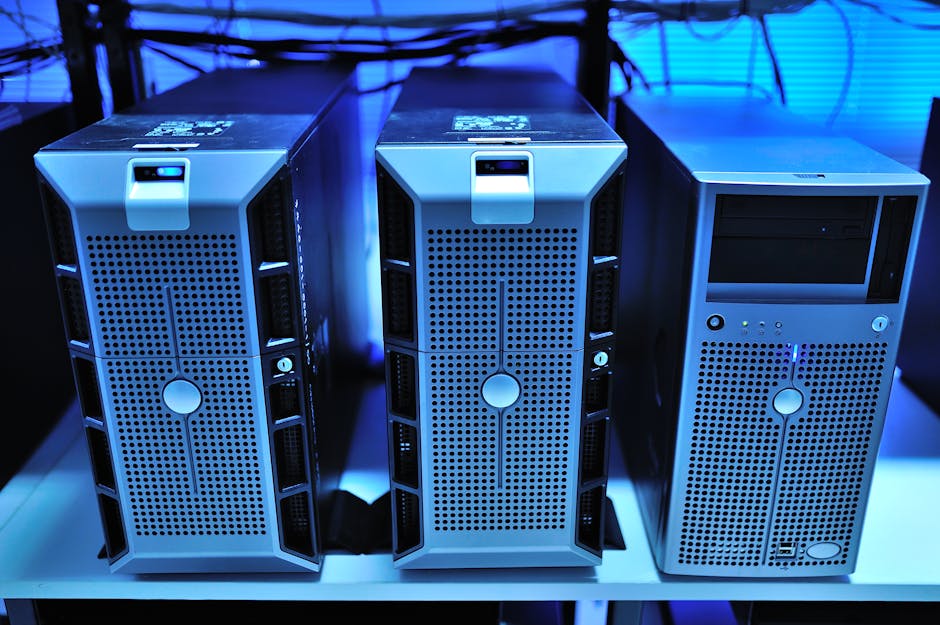
Data center power limits AI cluster size only when a site cannot get enough power on the schedule it needs. The evidence on how often that happens is thinner than the headlines suggest: the best engineering source describes one operator, and most wait-time figures measure something other than a data-centre connection.
What the evidence can and cannot tell you
Three terms carry the argument. Accelerator TDP is the vendor's thermal design power for one accelerator. A planning power limit is the lower per-accelerator setting an operator budgets against. A load interconnection is a data centre's utility connection as a consumer; a generation interconnection is the queue for new plants feeding the grid.
No primary dataset I found measures how long data-centre load requests take. The widely quoted wait figure comes from Berkeley Lab's generation queue and excludes load requests and behind-the-meter projects. Load-timing statements below therefore rest on secondary or commercial sources.
How a megawatt budget becomes an accelerator count
The 100 MW-scale cluster paper describes planners sizing from a lower power limit taken from the projected power-performance curve, not from accelerator TDP. The trade is a small per-accelerator performance loss for more accelerators inside a fixed megawatt budget. The paper reports that power budgeting starts six to twelve months before accelerators ship. These are one operator's figures for its own hardware and workloads; I found no comparable published curve for other clusters.
Heterogeneous racks compound this. The same paper notes that GPU, network, storage and cooling loads share a rack with uneven power-delivery paths, and the weakest path limits how far one job's power limit can be raised. That is the paper's finding, not a general formula.
Rack density sets the stakes. A secondary Quartz report puts a rack of current NVIDIA training chips at 120 to 140 kW, with next-generation systems projected above 200 kW. Check both figures against vendor publications before quoting them.
Where the wait comes from: grid timing
Berkeley Lab's Queued Up 2026 edition reports a median of more than five years from interconnection request to commercial operation for generation projects built in 2025. It is a generation statistic and says nothing direct about a data-centre connection. The generation queue totalled about 2,061 GW at end-2025, down 10% from 2024, according to an APPA summary of the same report.
Regional figures are commercial claims. Electric Choice gives ERCOT 3 to 4 years, PJM approaching 7 and CAISO 5 to 6. I could not match them to grid-operator filings, so treat them as unverified.
Peak, ramp and power quality as a separate cap
A survey-style preprint reports that large GPU clusters can swing by hundreds of megawatts within seconds, and flags low inertia and harmonic distortion as grid concerns. Its figures are indicative. The inference that utilities may cap ramp rates or require smoothing, which would limit usable power below nameplate even where megawatts exist, is the author's reading of the review, not a documented utility rule.
Conditions that change the answer
Each condition changes the outcome differently. None has a published comparison of grid-only, grid-plus-storage and on-site gas options at the same site.
- On-site generation. Developers are reported to build on-site generation to bypass queues; that is industry framing, not measured evidence. A single-author Substack analysis of Meta's planned one-gigawatt Edmonton campus separates a 250 MW supply agreement from the second half of 2028, a 970 MW grid allocation and a 932 MW gas project targeted for 2030. The author notes the campus may start before its dedicated plant. The public record does not fix how these layers are metered or dispatched.
- Power capping and grid-responsive training. A preprint reports clusters cutting power on grid dispatch events while keeping high-priority service levels, and jointly tuning GPU power limits and training configuration to cut energy with accuracy and training performance maintained. These are early experiments, not evidence that large fleets do this routinely.
- Phased energisation. Scale can follow the energisation schedule. One campus reportedly opened 206 MW across two halls in September 2025 on a 300-day build. This is a secondary report that I have not checked with the operator.
- Existing capacity. A site with energised capacity is not waiting on a new connection. Whether a given cluster is power-bound depends on site, contract and utility rules. I found no general rule that holds across markets.
Reading the forecasts
Gartner's November 2024 press release forecast that 40% of AI data centres would be operationally constrained by power availability by 2027. That is a forecast, not an observed count, and I found no 2026 follow-up measuring it.
The IEA's Energy and AI edition projects data-centre electricity use to more than double, to around 945 TWh by 2030. The later Key Questions edition gives roughly 950 TWh for 2030, from 485 TWh in 2025. The baselines differ between editions, so cite the one you use and do not merge the series.
A secondary Yahoo Tech report attributes a 1,200 TWh figure to a recent Gartner statement. I could not check it against Gartner's own release, so do not quote it unverified.
What remains open
Four things are unresolved: no independent dataset of data-centre load-interconnection waits; no measured fleet-scale evidence for grid-flexible training; no general cross-market rule for when a cluster is power-bound; and no published link, beyond the single-operator paper, between a megawatt budget and an accelerator count under real power settings.
For a working check, confirm whether a quoted wait is a generation or a load request, confirm rack power against vendor documentation, and confirm the edition and baseline of any forecast before relying on it.