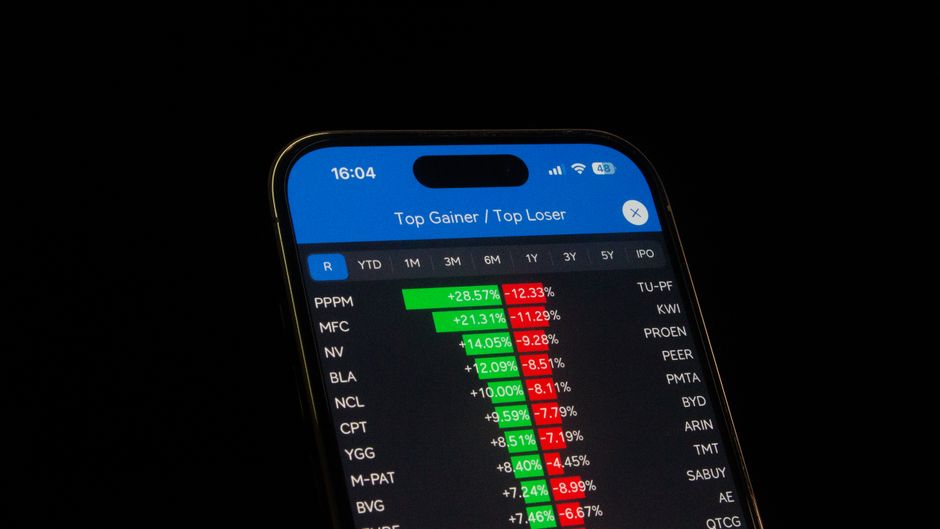
Is loss aversion real? The research says yes, as a tendency, but the popular claim that losses hurt about twice as much as gains is an average from a contested literature, not a fixed law. A 2024 meta-analysis supports roughly 2x on average, while 2025 re-analyses dispute how stable and universal that number is.
The 2x rule is being tested again
The current interest comes from papers that revisit the number most popular coverage repeats as settled. Brown, Imai, Vieider and Camerer, in the Journal of Economic Literature (2024), pooled 607 estimates from 150 articles and reported a mean coefficient of roughly 1.8 to 2.1. That supports something near 2x as an average. It does not establish an exact constant.
Critics dispute how stable that estimate is. Yechiam and Zeif’s “Loss Aversion is Not Robust: A Re-Meta-Analysis” (2025) reports in its abstract an overall lambda of 1.82, close to the original figures. Its moderator findings matter most to the debate, and they were not checked for this article. Walasek, Mullett and Stewart go further and argue that lambda estimates are not a reliable measure of loss aversion at all.
What loss aversion means and where the number comes from
Loss aversion is a core idea of prospect theory, developed by Daniel Kahneman and Amos Tversky: a loss of a given size feels more intense than a gain of the same size. The Decision Lab’s explainer frames this as losses feeling about twice as strong as equivalent gains. That is a useful summary, not an exact law.
A sharper ratio of 2.25 appears in secondary tables attributed to Tversky and Kahneman. This article has not checked it against the original paper, so treat it as unverified.
Why investors hold losers and sell winners
The best-documented everyday example is the disposition effect. In Odean’s study of trading records for 10,000 accounts at a discount brokerage, investors were clearly more willing to sell winning positions than losing ones. The pattern was not explained by rebalancing or trading costs, and in taxable accounts it lowered after-tax returns.
Odean’s paper also raises a rival explanation. An investor holding a loser may simply believe it will recover, a mean-reversion belief, rather than dislike locking in a loss. The two are hard to separate. The pattern is therefore evidence of a selling bias, not proof that loss aversion alone causes it. Some secondary sites report figures for return costs and sales splits. This article has not confirmed them and does not use them.
Housing sellers and the nominal-loss effect
The housing evidence is more specific. Genesove and Mayer studied Boston condominium sales in the 1990s and found that sellers facing a nominal loss, selling for less than they paid, set higher asking prices, achieved higher selling prices and sold less often. Their working paper, “Loss Aversion and Seller Behavior: Evidence from the Housing Market,” is on SSRN.
The limits matter. That is one city, one decade and one property type, so it does not describe household behaviour generally. A later study argues that a hyperbolic-discounting model can reproduce similar housing outcomes without invoking loss aversion, which makes the housing result suggestive rather than settled.
When the effect weakens or is hard to measure
Several findings cut against a universal effect. A PLOS ONE experiment with 34 participants found loss aversion was significantly reduced when people chose on behalf of someone else, and the authors partly link this to regret. It was a small lab task. A 2022 paper in Judgment and Decision Making found no loss aversion for small amounts in designs with symmetric gains and losses presented in random order.
A 2021 Social Science Space report describes informal scepticism among researchers, including the view that some results were wrongly attributed to loss aversion. That is one journalist’s account of informal views, not a survey.
What this means for your own decisions
The more useful question is where loss aversion touches your money. Three checks follow from the evidence.
- Before refusing to sell below your purchase price, ask whether you are holding because of the price you paid or because you have a specific reason to expect recovery. Write that reason down, with what would change your mind.
- Set exit rules in advance, such as a valuation point or a review date, so the decision is not made when a loss first appears on screen.
- Look at the same choice framed as a gain and as a loss. If your answer changes, the framing is doing work.
Be clear about the limits. No rigorous trial has shown that these fixes work in everyday financial decisions. Examples such as refusing to sell below cost or avoiding all investment risk are plausible illustrations, not measured outcomes. The research reviewed here has little primary data on saving, insurance or spending. The most practical signal is the PLOS result: when the choice belongs to someone else, the bias appears smaller. Asking what you would advise a friend in the same position is a cheap test, though it is untested.