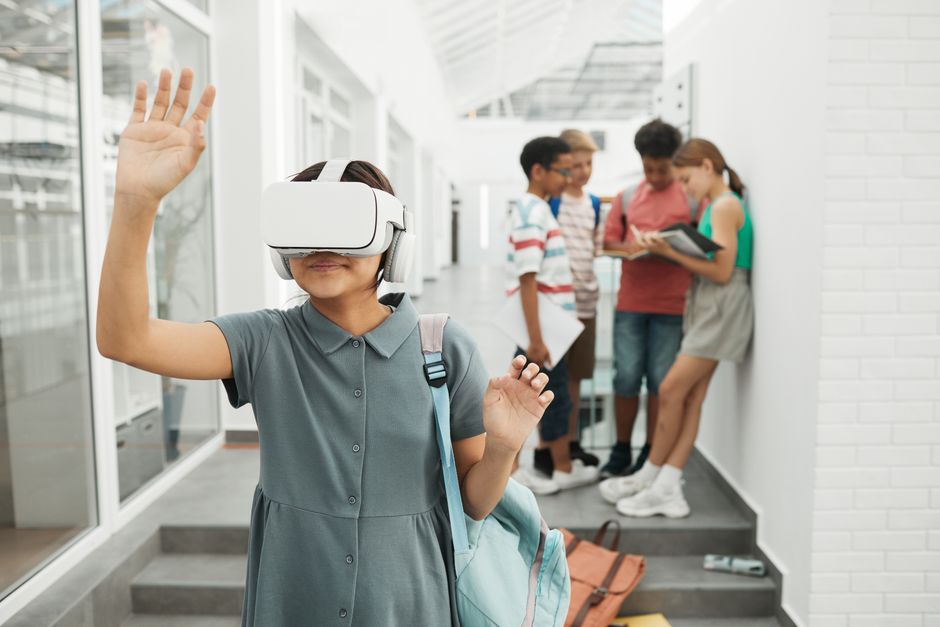
Introduction to Virtual Reality in Education
Virtual reality (VR) has emerged as a groundbreaking technology that is transforming various sectors, with education being one of the most promising fields. By creating immersive and interactive experiences, VR enables learners to engage with content in ways that traditional methods cannot match. This article delves into the implications of incorporating virtual reality into educational and training environments, highlighting its potential benefits and challenges.
The Rise of Immersive Learning
Immersive learning, facilitated by virtual reality, allows students to experience scenarios and environments that would be impossible or impractical to recreate in a typical classroom. For instance, medical students can practice surgeries in a VR setting, gaining hands-on experience without the risks associated with real-life procedures. This kind of experiential learning not only enhances skill acquisition but also builds confidence in students as they prepare for real-world applications.
Key advantages of immersive learning include:
- Enhanced Engagement: VR captivates learners, fostering a deeper connection with the material. The interactive nature of VR can make learning more enjoyable, which can lead to increased motivation.
- Real-World Applications: Students can apply theoretical knowledge in practical situations, improving retention. This bridge between theory and practice is essential for deeper understanding.
- Safe Learning Environment: Mistakes can be made without real-world consequences, encouraging exploration and experimentation. This safety net allows learners to take risks that they might avoid in traditional settings.
Benefits of VR in Educational Settings
The benefits of incorporating virtual reality into educational settings are numerous. It not only enhances the learning experience but also accommodates diverse learning styles. For visual and kinesthetic learners, VR provides a platform to visualize complex concepts and practice skills interactively. The adaptability of VR can cater to individual preferences, making education more inclusive.
Some notable benefits include:
- Increased Knowledge Retention: Studies suggest that immersive experiences can significantly enhance memory retention compared to traditional learning methods. The active involvement in learning through VR helps solidify information in long-term memory.
- Accessibility: VR makes education more accessible by providing remote learning opportunities and enabling students to explore environments they may never visit in person. This can be particularly beneficial for students in remote or underserved areas.
- Collaboration: VR platforms often facilitate collaborative learning, allowing students to work together in a virtual space, regardless of their physical location. This collaboration can enhance communication skills and teamwork.
Challenges and Considerations
Despite its transformative potential, the integration of virtual reality in education is not without challenges. Educators and institutions must navigate several factors to ensure successful implementation. Addressing these challenges is crucial for maximizing the effectiveness of VR in educational contexts.
Key challenges include:
- Cost: High-quality VR equipment and software can be expensive, potentially limiting accessibility for some institutions. Budget constraints may hinder the ability to implement VR programs effectively.
- Training: Teachers need adequate training to effectively incorporate VR into their curricula and to guide students through immersive experiences. Professional development programs are essential for equipping educators with the necessary skills.
- Technical Limitations: Issues such as motion sickness and the need for powerful hardware can hinder the learning experience. Ensuring that technology is user-friendly and accessible is vital for widespread adoption.
The Future of VR in Education
The future of virtual reality in education is bright, with continuous advancements in technology likely to enhance its effectiveness and accessibility. As VR becomes more affordable and user-friendly, more educational institutions are expected to adopt it as a core component of their teaching strategies. The evolution of VR technology will open new avenues for innovative educational practices.
Potential future developments include:
- Personalized Learning: VR can be tailored to meet individual student needs, providing customized experiences that cater to different learning paces and styles. This personalization can help address gaps in understanding and support diverse learners.
- Integration with AI: Combining VR with artificial intelligence could create adaptive learning environments that respond to student performance in real time. Such integration could revolutionize how educators assess and support student learning.
- Expanded Content Libraries: As more educational content is developed for VR, the range of subjects and skills that can be taught using this technology will grow significantly. This expansion will enrich the educational landscape and provide more opportunities for learners.
Conclusion
Virtual reality is undoubtedly reshaping the educational landscape, offering immersive and engaging learning experiences that traditional methods struggle to provide. While there are challenges to overcome, the potential benefits of VR in education and training environments are profound. As technology continues to evolve, it is crucial for educators, policymakers, and institutions to embrace these advancements and explore innovative ways to enhance the learning journey for students worldwide. The future of education may very well be defined by how effectively we harness the power of virtual reality.