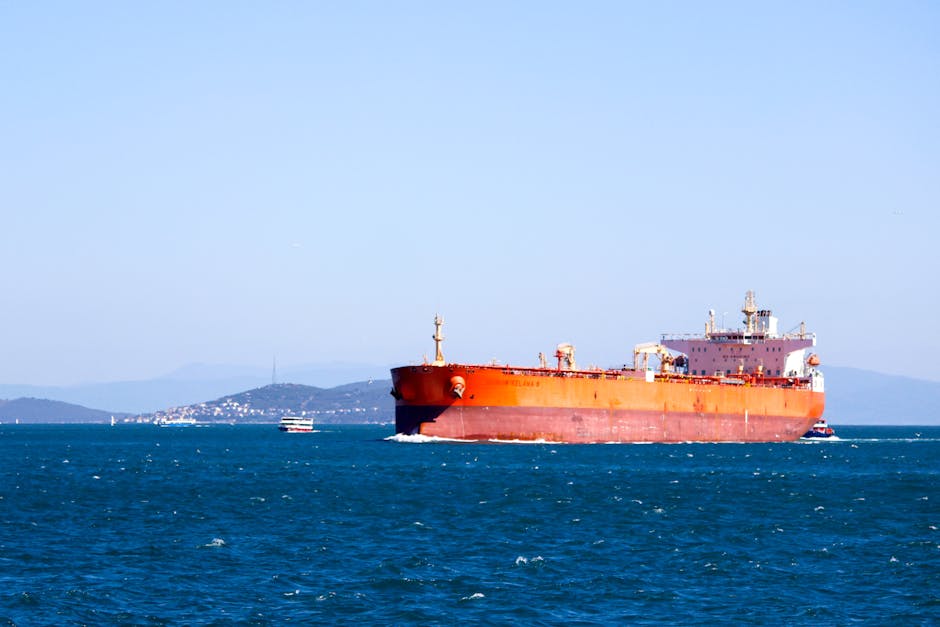
Iranian state television, citing a Revolutionary Guard navy statement, says seven oil tankers caught fire or were damaged in the Strait of Hormuz overnight, on what the research treats as 21 to 22 October 2026. Four were reportedly targeted while transferring oil; three were damaged after striking naval mines and were immobilised. The statement gave no casualty details and did not name any flags. As of 22 October, no independent source had identified a vessel, owner or damage assessment for any of the seven.
That gap is the story. Shipping security reporting has described a run of incidents around the strait since the war began on 28 February, and an unverified count of seven in one night is the kind of figure that gets repeated before anyone checks it. This piece sets out what the Iranian account says, what it rests on, and which records would confirm or reject it. The site's usual territory is AI and developer tooling; this is a maritime security story, covered because the verification problem it raises, how to judge an incident count from parties with conflicting incentives, is the same one practitioners face when assessing model evaluation claims.
What the Iranian account says, and where it comes from
According to the AP wire copy, the Revolutionary Guard navy statement, relayed by state television, divides the seven vessels into two groups. Four were targeted while transferring oil. Three struck naval mines. AP describes the incident as "potentially" the largest single-day incident since the war began on 28 February. That hedge matters: the claim is a count from one party, and no published tally of attacks or damaged vessels exists against which to test a superlative.
Timing is also loose. AP's copy says "overnight Thursday," and at least one lower-quality outlet gave a different day. The research treats the window as 21 to 22 October, but that date needs confirming against the wire text before anything is published.
The Iranian statement, as reported, also warned that US attempts to allow tankers through what it called "illegal passages" could widen the Guard's response to US bases in the region. That is a threat, not evidence about who damaged the ships.
Why the counts are hard to compare
Seatrade Maritime reported on 18 October that most attacked vessels refuse to report to UKMTO, the UK maritime incident body, and that its notices have sometimes been published late. If that is right, official tallies undercount. Iranian figures have the reverse problem: they come from a party with an interest in the narrative, and they arrive without vessel identifiers. Neither source can anchor a "largest ever" comparison, and a reader should treat any such ranking as unsupported until both kinds of record exist for the same dates.
The attack-versus-mine split is harder still. Iran's count separates projectile attacks from mine strikes, but the research does not explain how a mine strike is verified, how a mine is dated, or whether a device could be older or laid by another party. Ship damage from a mine and from a projectile can look similar in early reports. Without that evidence, the split is Iran's attribution, not a finding.
Earlier claims in the same weeks
The new element is the scale and the explicit split, not the existence of mine incidents. Earlier in October, the IRGC said mines had stopped three tankers, and U.S. Central Command rejected that account as false, according to IBTimes Australia. That CENTCOM rejection concerns the earlier claim and should not be read as a response to the 22 October report. A Kurdistan24 report also covers an Iranian claim about a burning tanker in a restricted zone, which CENTCOM rejected.
Trade reporting describes a busy October, but the counts behind it are the same contested records. Treat the pattern as plausible and partly documented, not as a settled series.
What it could mean for oil and shipping
Traffic data for the strait is thin. An aggregator, roic.ai, has published a flow estimate of 13.1 million barrels per day for late September, against 17.1 million before the war. Roic.ai is a secondary source, the figure predates this incident by weeks, and a conflicting estimate built on Kpler data exists. Neither number should be used to judge the effect of 21 to 22 October.
As an estimate rather than a finding, immobilised or inspection-bound tankers can remove usable capacity from a route quickly, even when few ships are involved. Insurers often respond to such incidents by repricing war-risk cover. No verified oil price, freight rate or insurance move tied to this incident was found, so none is given here. The useful indicators are transit counts and insurance notices, which show whether traffic slowed, not the incident count alone.
Evidence assessment
The strongest supported point is narrow: Iranian state television, citing a Revolutionary Guard navy statement, reported the seven-tanker claim and its split. That is what the wire copy establishes. It does not establish that the ships were damaged. AP's "potentially" hedge on the superlative is part of the record and should be kept. Trade-press and monitor reporting supports only the weaker proposition that attacks on shipping were reported at an elevated rate in October, and the counts behind that are not independently checked.
Unknown on the evidence reviewed: whether any of the seven vessels was hit; their names, flags, owners and casualties; whether the strait is closed or how much traffic is moving; any US Navy or CENTCOM response to this specific claim; how the mines were identified or attributed; and any oil price, freight rate or insurance movement tied to the incident.
Practical implications
Newsroom staff should report the claim as Iranian, name the source and its split, and avoid repeating "largest ever" as fact. Anyone exposed to tanker freight, insurance or energy prices should check UKMTO notices and vessel tracking for the stated locations and times before acting on the count. Analysts should treat the October incident records as overlapping, incomplete series that cannot simply be added together.
Limitations and open questions
Without a named vessel or an independent damage report, the seven-tanker figure cannot be separated from its source. No public tally exists against which the superlative can be tested. The mine attribution has not been checked against any public evidence. The market effect is unmeasured. Vessel identities from registries or operators, UKMTO notices with positions and times, and transit counts checkable against tracking data would each settle part of this.
Editor's take
The evidence supports treating the seven-tanker claim as serious and unverified. It comes from a state broadcaster relaying a military statement. It fits a period in which shipping security reporting describes repeated incidents, though the counts behind that reporting are themselves incomplete. That justifies prominent coverage. It does not justify presenting the count as fact.
My estimate, not a finding, is that if seven ships had been damaged in a way that immobilised them, some identifying detail would likely reach a registry, operator or insurer within days, since each has a reason to confirm a loss. The absence of any such detail so far is the most informative fact in the record, though it is not yet conclusive.
The superlative is the part most likely to be repeated carelessly, and it should be dropped unless a count both sides and independent monitors accept becomes available. The defensible reading is that October shows a pattern of reported attacks and mine incidents, with the size of any single day still open. That argues for caution in coverage, not for a view on who is responsible.